
Demand Consolidation
Cut freight cost by consolidating orders before they ship.
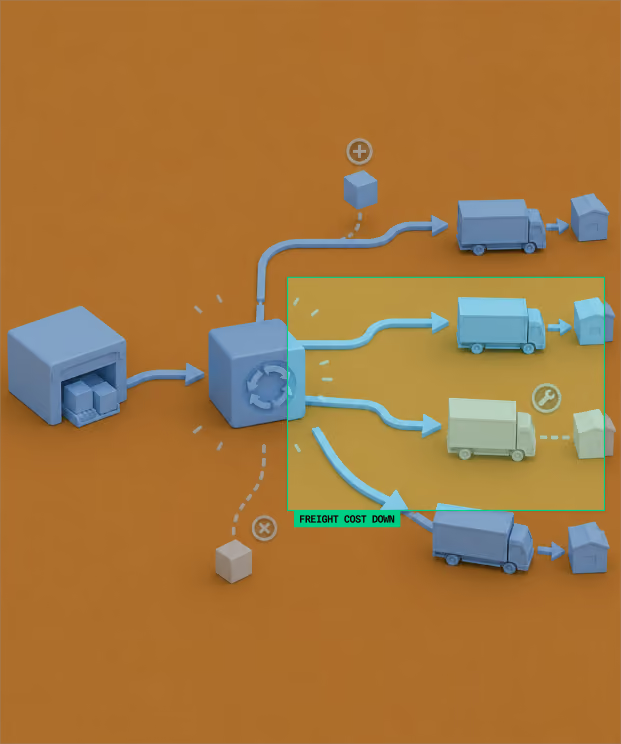
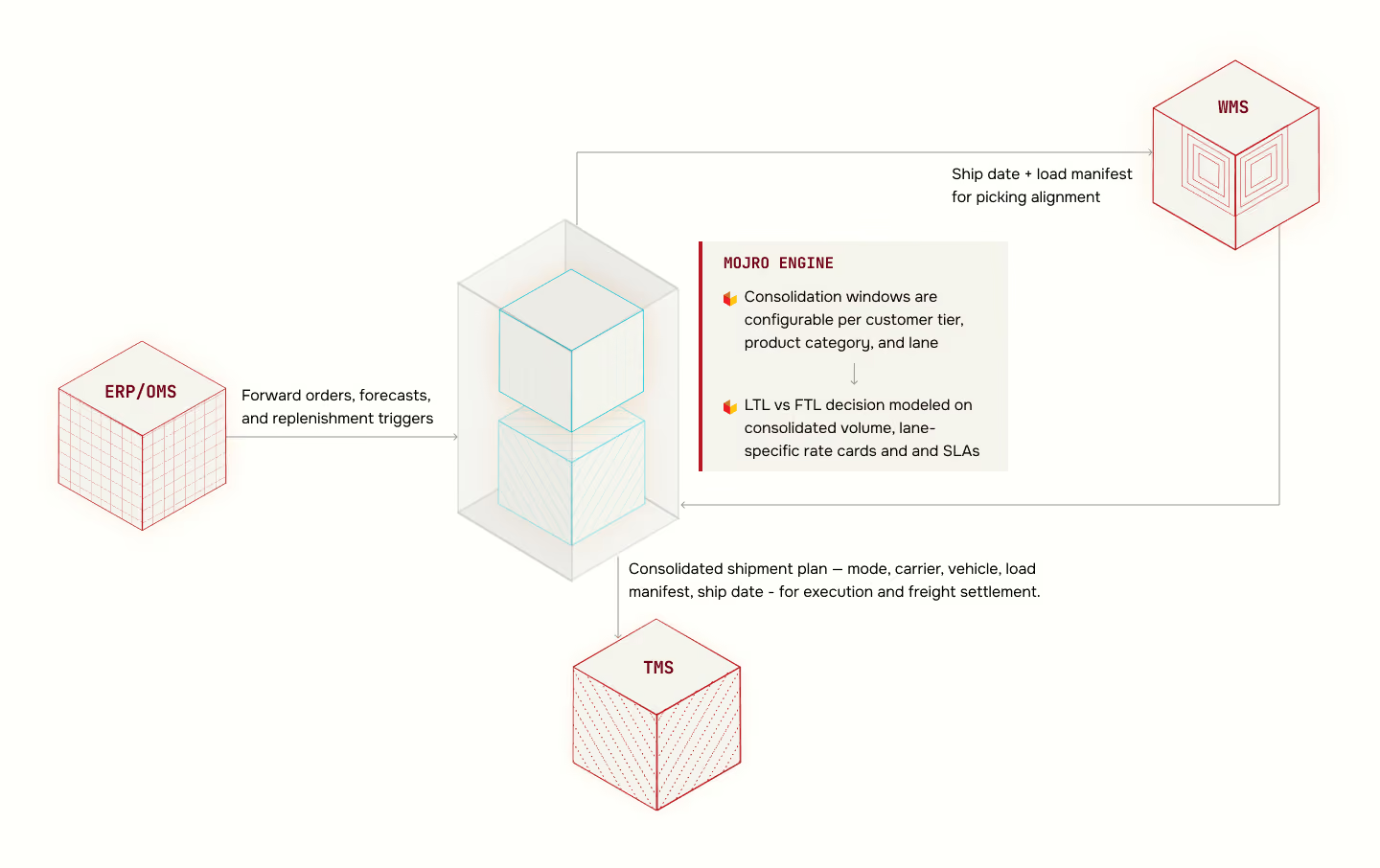
Mojro batches orders intelligently, selects the optimal ship date, chooses the right mode for each consolidated load and computes the LTL-FTL split that minimises total freight cost. Every decision is made with the full demand picture, not order-by-order.
The problem
Every LTL shipment that
could have been FTL is a
cost you choose to pay
Your orders ship as they arrive, LTL by default, with no consolidation window.
Ship date is driven by order receipt and not by what produces the best load fill, so vehicles move half-empty.
The LTL vs FTL decisions is made with a rate table lookup, not by what the actual consolidated volume justifies.
Consolidation opportunities are identified manually, ad-hoc, and inconsistently.

Capabilities
Every shipment decision, solved with the full demand picture. Not order by order.

01 Order batching
Hold the right orders. Ship the urgent ones. Know the difference.
Know when to hold orders. Know when to ship them. Mojro batches before dispatches, and identifies the ones to ship immediately.

02 Ideal ship date recommendation
Get the ship date that fills the vehicle without missing the SLA.
Balance consolidation against delivery urgency. Ship dates that fill the vehicle, without missing the SLA.

03 LTL vs FTL mode optimization
Let the volume decide the mode and not the rate table.
The volume, not the rate table, decides the mode. Consolidated volume, lane rate structure, and SLA requirements make the choice, not dispatcher habit.

04 Geographic clustering
Same region. Same vehicle. Not a coincidence - a plan.
Same region, same vehicle. Orders are clustered geographically before mode selection, ensuring coherent plans, not random routes.
05 Fill rate maximization
Minimise the empty space on every vehicle that moves.
Fill rate is Mojro's primary objective in every choice, every shipment mode, every lane.

06 Warehouse throughput alignment
Consolidated ship dates, your warehouse can actually execute.
Consolidated ship dates your warehouse can actually execute. Shipping dates are aligned with warehouse picking and packing capacity, so there's no congestion or bottlenecks.

Consolidation intelligence.
What actually changes when demand is consolidated before the vehicle moves?
10 - 15%
cost reduction because of better mode mix
100%
Adherence to SLA's
100%
Planning Efficiency
Stop shipping order-by-order. Start consolidating demand.