
Top-up and Continuous Re-optimization
Late orders, cancellations, breakdowns - absorbed automatically, every time.
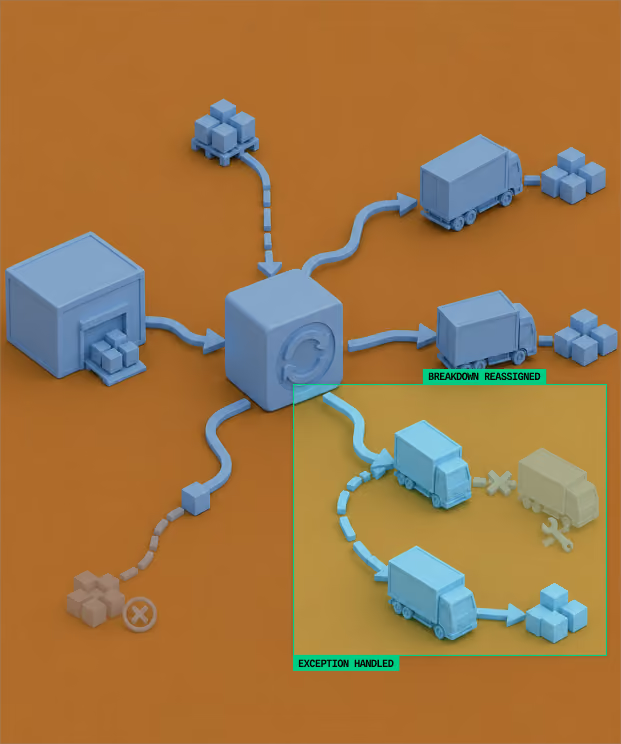
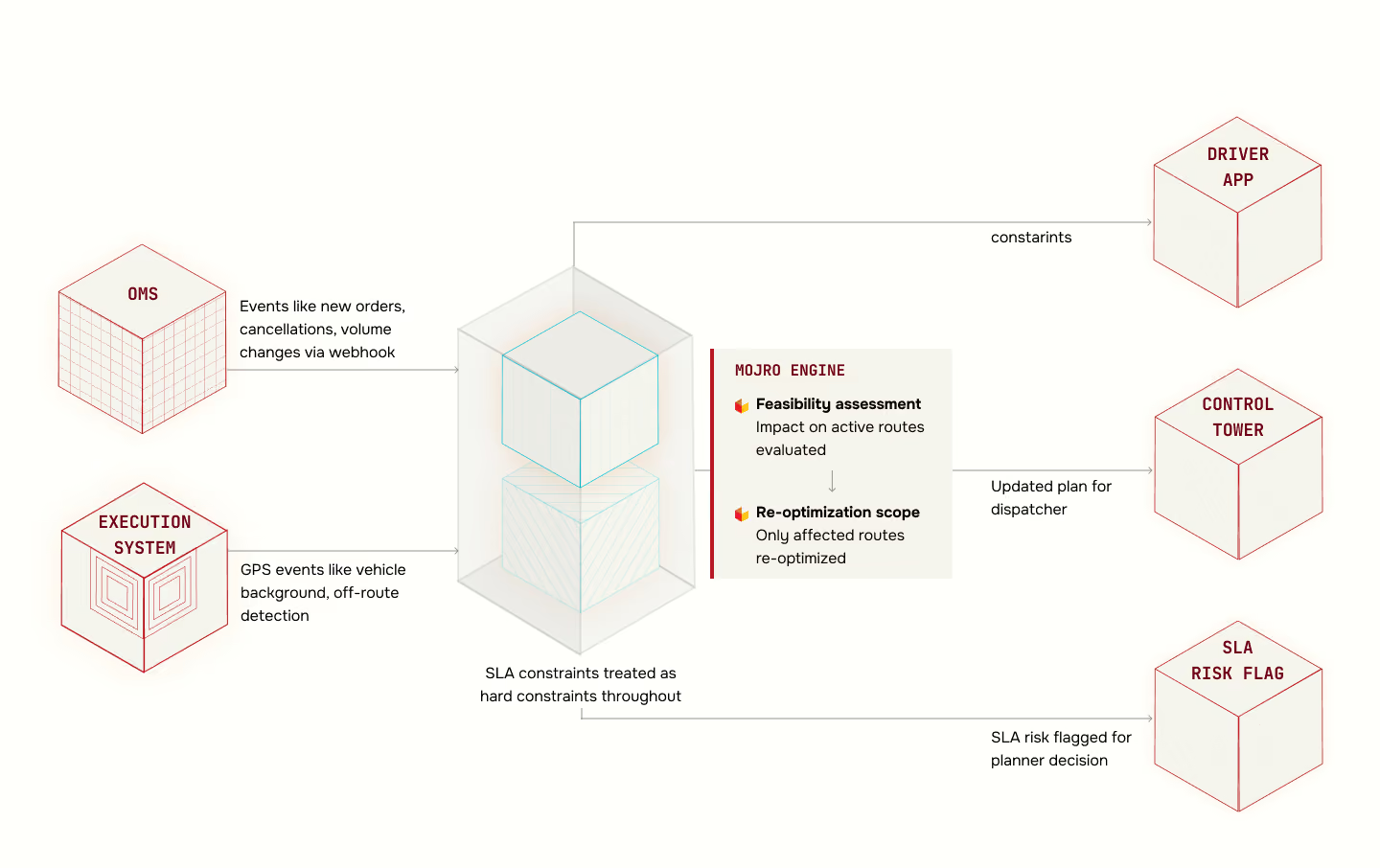
Mojro evaluates every incoming disruption against your active routes in real time. Late orders are inserted, cancellations are consolidated, and breakdowns reassigned by Mojro. Your dispatcher manages exceptions, not the plan.
The problem
Every disruption your team
handles manually is a cost
that didn't have to exist.
When a late order arrives after dispatch, there's a manual phone call to the driver, who adjust their route on the fly.
A volume change means a full re-plan. Thirty to ninety minutes of disruption, every time, for something the system should handle automatically.
Cancellations create gaps in routes that nobody closes. Vehicles run partially empty because the plan never caught up with reality.
End-of-day reconciliation shows you exactly what the disruptions cost. By then, the money is already spent.

Capabilities
Every operational disruption, handled automatically.

01 Late order injection
Late orders don't derail plans, they get absorbed into it
Late orders are evaluated against active routes, and injected automatically if they fit within SLA and vehicle capacity. If not, a new trip is generated with no manual intervention.

02 Volume change handling
When volumes shift, the plan shifts too
Order volume increase or decrease triggers re-optimization. Vehicles added, removed, or re-sized as needed.
03 Cancellation consolidation
A cancellation doesn't create a gap
Free vehicle capacity is identified, and Mojro tightens remaining routes automatically. Cancelled orders, thus, reduce cost instead of creating empty miles.
04 Disruption re-optimisation
When disruptions occur, plans are updated in minutes, not hours
Vehicle breakdown, driver absence, depot closures, all immediately reassigned across the full fleet.
05 SLA-protected re-routing
SLA's maintained even as the plan adapts
Mojro re-optimizes and keeps customer SLAs as hard constraints. The plan adapts but never at the cost of a committed delivery windows.
06 Continuous optimisation loop
Plans aren't static. Conditions change
As conditions change throughout the day, Mojro updates plans with the best available answer at the time.

Continuous re-optimization.

What actually changes when disruptions stop being manual?
Upto 10%
improvement from the base fill rates
100%
automation & augmentation
90% +
improvement in planning efficiency
Stop reacting to disruptions. Build a plan that absorbs them.